
Can You Put Stuff in Car When Shipping in USA?
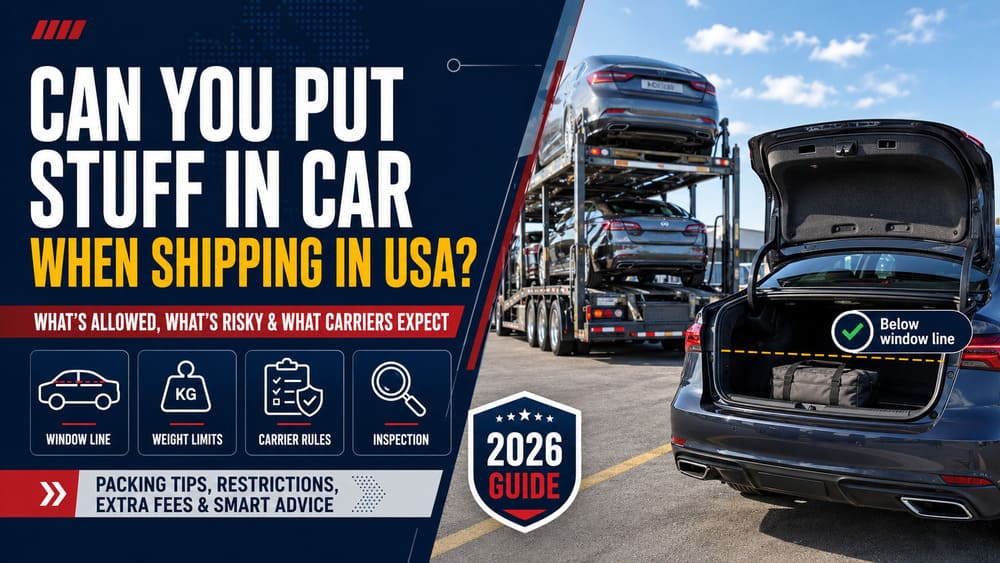
If you are asking can you put stuff in car when shipping, the safest answer is: only if the carrier allows it, only in small amounts, and usually at your own risk. Many auto transport companies ask customers to remove all personal belongings before pickup. Others may allow limited lightweight items in the trunk or below the window line. However, those items usually do not receive insurance coverage. This guide explains what carriers commonly allow, what not to pack, how personal items affect cost, and how to prepare your vehicle before shipping.
What is shipping a car with personal items?
Shipping a car with personal items means leaving belongings inside the vehicle while an auto transport carrier moves it by truck, trailer, or vessel.
This is different from hiring a moving company. Auto transport companies move vehicles, not household goods. Therefore, most carriers limit or prohibit items inside the car because belongings add weight, create liability, and may not fall under cargo coverage.
An open carrier is an uncovered multi-car trailer used for most standard vehicle shipments. An enclosed carrier is a covered trailer that protects vehicles from weather, dust, and road debris. Both options may restrict personal belongings because the carrier’s job is to transport the vehicle itself.
A door-to-door shipment means the carrier picks up and delivers the vehicle as close as safely possible to the requested addresses. A terminal-to-terminal shipment means the vehicle moves between storage or transport terminals. In both cases, personal item rules depend on the carrier’s policy.
Why personal items matter when shipping a car
Personal items matter because they affect safety, insurance, truck weight, theft risk, and carrier compliance.
A car carrier plans each load based on vehicle weight, trailer position, route, and legal road limits. Extra belongings inside the vehicle can change the weight estimate. As a result, the driver may ask you to remove items at pickup or charge an additional fee.
Insurance is another major issue. Auto transport insurance typically focuses on the vehicle, not luggage, electronics, clothing, boxes, or household goods inside the cabin. Therefore, if personal items go missing or break during transit, the carrier may not cover the loss.
In addition, visible belongings can create theft risk. Vehicles may travel on open trailers, sit at terminals, or stop during the route. Even when the car stays locked, visible bags or boxes can attract attention.
That is why the safest approach is simple: ship the vehicle clean and mostly empty. If a carrier allows limited belongings, pack lightly and confirm the rule in writing before pickup.
Can you put stuff in car when shipping?
Can you put stuff in car when shipping? Sometimes yes, but only if the carrier permits it and the items follow strict limits.
Many carriers allow a small amount of soft, lightweight belongings in the trunk or cargo area. A common informal limit is around 100 pounds, but this is not a universal rule. Some companies allow less. Others allow nothing at all.
The key point is that you should never assume. Ask the company before booking and confirm the answer in writing.
Item type | Usually okay? | Why it matters |
|---|---|---|
A small duffel bag in the trunk | Sometimes | Must stay hidden and lightweight |
Clothing below the window line | Sometimes | Lower theft risk if not visible |
Boxes on seats | Usually no | Visible and may shift during transport |
Electronics | No | High theft risk and usually not covered |
Jewelry, cash, documents | No | Valuable and difficult to insure |
Tools or heavy items | Usually no | Adds weight and can damage the vehicle |
Food or liquids | No | Can spill, leak, smell, or attract pests |
Hazardous materials | No | Safety and legal risk |
The safest rule is to keep the car empty. If you must pack something, keep it light, soft, hidden, and approved by the carrier.
How to ship a car with belongings step by step
Shipping a car with belongings requires extra care because carrier policies vary. Follow these steps before pickup.
For a broader preparation checklist, read How to Ship a Car to Another State.
Key rules for packing items in a car during transport
Carriers may use different rules, but most restrictions follow the same logic. They want the vehicle safe, light, accessible, and easy to inspect.
Keep items hidden
Items should stay in the trunk or cargo area. They should not sit on seats, dashboards, floors, or near windows.
This matters because visible belongings increase theft risk. In addition, loose objects can move during loading, unloading, or transit.
Stay under the carrier’s weight limit
Some carriers allow a limited amount of personal items, often around 50 to 100 pounds. However, this depends on the company, truck, route, and driver.
Extra weight can create problems because car carriers must follow truck weight limits. If the vehicle weighs more than expected, the driver may ask you to remove items.
Avoid fragile or valuable items
Do not pack laptops, tablets, cameras, jewelry, watches, collectibles, cash, legal documents, or expensive tools. These items may not receive coverage.
In addition, the carrier may not inspect or inventory belongings. Therefore, proving loss or damage can be difficult.
Do not pack prohibited items
Never pack firearms, ammunition, illegal substances, hazardous chemicals, alcohol, flammable products, fireworks, perishable food, live plants, or pets.
Some items create safety risk. Others can create legal or inspection issues. Therefore, keep the vehicle clean and simple.
Keep the driver’s area clear
The driver may need to steer, brake, or move the vehicle during loading and unloading. Therefore, the driver’s seat, pedals, steering wheel, mirrors, and windows must stay clear.
If items block visibility or movement, pickup may get delayed.
Open vs enclosed transport with personal items
Personal item rules can apply to both open and enclosed transport. However, the risk profile is different.
Transport type | Personal item risk | Best use |
Open carrier | Higher exposure and theft visibility | Standard cars with no valuables inside |
Enclosed carrier | More protected, but still restricted | Luxury, classic, exotic, or high-value vehicles |
Door-to-door | Convenient, but rules still apply | Residential moves with clear access |
Terminal-to-terminal | Higher storage exposure | Flexible shippers near terminals |
Expedited shipping | Less time in transit, but rules remain | Tight pickup or delivery deadlines |
Expedited shipping means priority pickup or faster scheduling. It may reduce waiting time, but it does not remove personal item restrictions.
An auto transport broker is a company that connects customers with carriers. A broker may explain general policy, but the assigned carrier must still approve what goes inside the car. Therefore, always confirm the final rule once the carrier is assigned.
Regional and city angle for packing belongings
Personal item rules apply across the USA, but route conditions can affect risk and timing. Los Angeles, Chicago, Houston, Miami, New York, Dallas, Phoenix, and Atlanta often have strong carrier activity. However, dense city pickups and long routes can make preparation more important.
Los Angeles
Los Angeles is a major shipping market for California routes, cross-country moves, and coastal transport. Because traffic and street access can be difficult, keep the car easy to inspect and load.
If you are comparing long-distance routes from California, start with popular car shipping routes.
Chicago
Chicago connects many Midwest, East Coast, and West Coast shipments. Weather can affect timing in winter, so avoid packing anything that could freeze, leak, or shift.
In addition, remove valuables before pickup because the vehicle may stop on a multi-state route.
Houston and Dallas
Houston and Dallas support strong Texas shipping lanes. Heat can be intense, especially in summer. Therefore, do not leave liquids, aerosols, food, or temperature-sensitive items inside the vehicle.
For regional comparison, review Florida to Texas car shipping companies.
Miami
Miami sees seasonal demand from snowbird moves and Florida relocations. Humidity and heat can damage electronics, leather goods, documents, and food items.
Therefore, keep the car empty or pack only soft, low-value items if the carrier allows them.
New York
New York pickups can involve tight streets, parking restrictions, and meeting points outside dense neighborhoods. A clean and empty car makes pickup faster.
For coast-to-coast comparison, review New York to California car shipping companies.
Phoenix and Atlanta
Phoenix heat can damage anything sensitive inside the vehicle. Atlanta routes may connect with Florida, Texas, the Midwest, and the Northeast.
In both markets, light packing and clear documentation help keep delivery simple.
How bestcarshippingcompanies.org helps with this
bestcarshippingcompanies.org helps customers compare car shipping companies by location, route coverage, service type, reviews, and available transport options. This matters because personal item policies are not identical across companies.
The platform supports comparison for open transport, enclosed transport, door-to-door delivery, terminal-to-terminal shipping, expedited shipping, state-to-state shipping, cross-country shipping, and Hawaii shipping. As a result, customers can review providers before asking specific questions about packing rules.
In addition, bestcarshippingcompanies.org lets users start with a city, state, or route instead of relying on one random quote. Customers can search from bestcarshippingcompanies.org or browse popular car shipping routes to compare companies that serve their move.
Common mistakes when putting stuff in a car for shipping
Many problems happen because customers treat car shipping like a moving service. However, auto transport has different rules.
Packing the car like a moving truck
A vehicle carrier is not a household goods mover. Therefore, boxes, furniture, appliances, and packed back seats can create problems.
If the driver sees too much weight or too many visible items, they may refuse pickup or ask you to unload the car.
Leaving valuable items inside
Valuables should never stay in a shipped vehicle. This includes electronics, jewelry, cash, legal documents, designer items, tools, and collectibles.
Even if the carrier allows limited belongings, those items usually travel at your own risk.
Forgetting about insurance limitations
Many customers assume everything inside the car receives coverage. That is usually not true.
Auto transport coverage normally focuses on the vehicle. Personal belongings may not receive protection, especially if the carrier did not approve them.
Blocking the windows or driver area
Items above the window line can create visibility and security issues. Items near pedals, seats, or mirrors can also make loading harder.
Keep the driver area completely clear. Also keep all windows visible from outside.
Not asking the assigned carrier
A broker may give general guidance, but the assigned carrier makes the final pickup decision. If the carrier refuses items at pickup, your shipment can get delayed.
Therefore, confirm the personal item policy after dispatch and before the truck arrives.
Packing liquids, food, or hazardous items
Liquids can leak. Food can spoil. Aerosols can react to heat. Hazardous items can create safety and legal issues.
As a result, these items should never stay inside a vehicle during transport.
Best way to prepare your car before shipping
The best way to prepare your car is to remove personal belongings, clean the vehicle, document its condition, and keep only approved items inside.
Start by removing valuables, documents, toll tags, parking passes, electronics, chargers, loose accessories, and garage remotes. Then wash the exterior so the driver can inspect the paint, glass, wheels, and body panels.
Next, take photos from all angles. Include close-ups of existing scratches, dents, windshield chips, bumpers, wheels, roof, and mirrors. These photos support the bill of lading inspection.
Finally, keep the fuel tank around one-quarter full. This gives the driver enough fuel to load and unload the car without adding unnecessary weight.
CTA: Compare car shipping companies before you pack
Before you leave belongings in your car, compare companies and ask each provider about its personal item policy.
Start at bestcarshippingcompanies.org to compare approved car shipping companies by city, route, reviews, and service options. Then confirm whether the carrier allows personal items, where they must go, and whether any weight limit applies.
Frequently Asked Questions
Can you put stuff in car when shipping?
Sometimes you can put a small amount of stuff in a car when shipping, but only if the carrier allows it. Many companies limit items to the trunk or below the window line. Those belongings usually travel at your own risk and may not receive insurance coverage.
Can I ship my car with stuff in it?
You may be able to ship your car with stuff in it if the transport company permits it. However, you should avoid valuables, electronics, documents, liquids, food, and heavy items. Always confirm the personal item rule in writing before pickup.
When shipping a car can you pack it?
When shipping a car, you should not pack it like a moving truck. Some carriers allow limited soft belongings in the trunk, but back seats and visible cabin areas should stay clear. If the car looks overloaded, the driver may refuse pickup.
When you ship your car can you pack it with boxes?
Most carriers do not want boxes inside the cabin because they can shift, block visibility, or attract theft. If a carrier allows belongings, soft bags in the trunk are usually safer than boxes on seats. Ask about weight limits before loading anything.
Are personal items insured during car shipping?
Personal items are usually not insured during car shipping. Auto transport coverage generally applies to the vehicle, not household goods or belongings inside it. Therefore, remove anything valuable or difficult to replace before pickup.
Related posts

Blog
Car Shipping Quotes: Compare Companies in the USA
Car shipping quotes are price estimates from auto transport companies for moving a vehicle from a pickup location to a delivery location.
Blog
How Much Does It Cost to Ship a Car Internationally? (Pricing Guide)
Destination is the single biggest variable in international auto shipping. Ocean freight rates vary widely based on route demand, port infrastructure, and available carriers.
Blog
Do Cars Fit in Shipping Containers? Full Guide
Car container shipping is a vehicle transport method where a car is loaded inside a steel shipping container and moved by truck, rail, or ocean vessel.