
How Much Does It Cost to Ship a Car Internationally? (Pricing Guide)
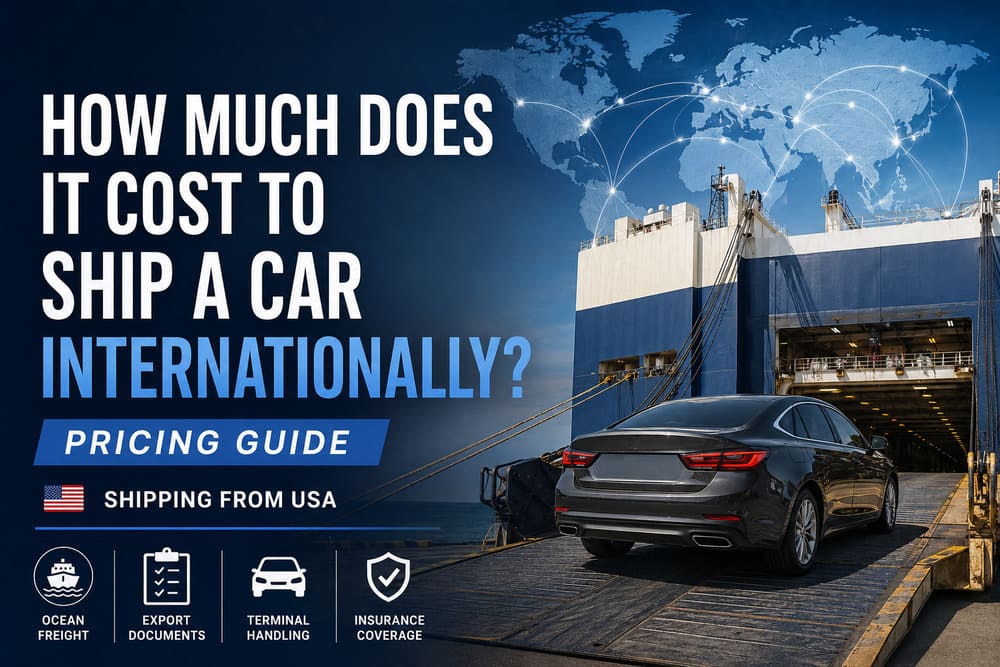
How much does it cost to ship a car internationally? Most international car shipments cost between $1,000 and $5,000, with the average falling around $1,500 to $3,000 for a standard sedan. The exact price depends on the destination country, the distance from your nearest port, which shipping method you choose, and how much import duty the destination country charges. This guide breaks down every cost factor so you can budget accurately before booking.
International Car Shipping Costs by Destination
Destination is the single biggest variable in international auto shipping. Ocean freight rates vary widely based on route demand, port infrastructure, and available carriers.
Here are typical price ranges for a standard sedan from a US East or West Coast port:
Destination | Estimated Cost (RoRo) | Estimated Cost (Container) |
|---|---|---|
United Kingdom | $1,200 – $2,000 | $1,800 – $3,000 |
Germany | $1,300 – $2,200 | $2,000 – $3,200 |
Australia | $2,000 – $3,500 | $3,000 – $5,000 |
Japan | $1,500 – $2,800 | $2,500 – $4,000 |
United Arab Emirates | $1,800 – $3,000 | $2,800 – $4,500 |
Nigeria | $1,500 – $2,500 | $2,200 – $3,500 |
Mexico | $600 – $1,200 | $900 – $1,800 |
Canada | $400 – $900 | $700 – $1,400 |
These figures cover ocean freight only. You will need to add port handling fees, origin transport to the port, destination customs clearance, and import duties — each covered in detail below.
What Shipping Method Should You Choose?
Just as with domestic ocean routes like shipping a car from San Diego to Hawaii, international auto transport uses two primary methods: RoRo and container shipping.
RoRo (Roll-On / Roll-Off)
RoRo is the most affordable and widely used method for international vehicle shipping. Your car is driven onto a specialized cargo vessel, secured on deck, and driven off at the destination port. No container is used.
Pros: Lower cost, more frequent sailings on major routes, simpler port processing.
Cons: Vehicle is exposed to salt air during transit. No personal items allowed inside the car.
Best for: Standard vehicles, daily drivers, and budget-conscious shippers.
Container Shipping
Container shipping places your vehicle inside a sealed steel container. You can choose a sole-use container (your car only) or a consolidated container (shared with other vehicles, which reduces cost).
Pros: Full protection from weather and handling. You can often ship personal goods inside the vehicle alongside the car.
Cons: Higher cost. Less frequent sailings on some routes.
Best for: Luxury cars, classic vehicles, motorcycles, and shipments where you want to include personal effects.
Full Breakdown: All the Costs Involved
The quoted shipping price is rarely the total cost. International car shipping involves several distinct fees, and understanding each one prevents budget surprises.
1. Ocean Freight
This is the core cost — the fee to move your vehicle from one port to another. It is what most carriers quote as their base price. Ranges are shown in the table above.
2. Origin Port Handling and Terminal Fees
Before your vehicle is loaded onto the vessel, it must pass through the origin port terminal. Terminal processing fees at US ports typically run $150 to $350, depending on the port and carrier.
3. Inland Transport to the Port
Unless you drop your vehicle off at the port terminal yourself, the carrier or a domestic transport partner will need to move it from your location to the port. This adds $200 to $600 depending on your distance from the nearest active shipping port.
This cost is similar in structure to standard domestic car shipping costs, where distance from the pickup location to a major carrier route affects the final price.
4. Destination Port Handling and Customs Clearance
At the destination country, your vehicle must clear customs. Customs clearance fees typically run $200 to $500, depending on the country and the customs broker you use. Some carriers include a basic customs clearance service; others require you to arrange it separately.
5. Import Duties and Taxes
This is often the largest additional cost — and one that many shippers overlook when budgeting. Import duties vary dramatically by country:
Country | Import Duty on Vehicles (Approximate) |
|---|---|
United Kingdom | 6.5% of vehicle value (if non-UK origin) |
Germany / EU | 6.5% of vehicle value + 19% VAT |
Australia | 5% customs duty + 10% GST |
Japan | 0% (under current trade agreements for US vehicles) |
UAE | 5% of CIF value |
Nigeria | 35% of vehicle value |
Canada | 6.1% if not USMCA-qualifying |
These rates change with trade agreements and government policy. Always confirm current rates with a licensed customs broker in the destination country before shipping.
6. Marine Insurance
International ocean shipments travel further and carry more exposure than domestic routes. Marine insurance for international auto shipping typically costs 1% to 3% of the vehicle's declared value. For a $20,000 vehicle, that is $200 to $600.
Some carriers include basic coverage in their quote. Read the policy carefully — many basic policies have high deductibles or exclude certain types of damage.
How Much Does It Cost to Ship a Car Overseas? Key Variables
Beyond destination and shipping method, several other factors affect your total cost.
Vehicle Size and Weight
Larger vehicles take up more space on the carrier and cost more to ship. A full-size pickup truck or large SUV typically costs $300–$600 more than a standard sedan on the same route.
Vehicle Operability
An inoperable vehicle requires special loading equipment. Most carriers charge an additional $150–$300 for non-running vehicles.
Port of Departure
The US has several major vehicle export ports. Baltimore, Houston, New Jersey, Jacksonville, Los Angeles, and Savannah handle the largest international auto shipping volumes. Using a port close to your location reduces your inland transport cost.
Age and Emissions Compliance
Many countries restrict the import of older vehicles. Australia, for example, has strict compliance requirements for vehicles over 25 years old. Japan does not allow import of left-hand drive vehicles for private registration. Always verify the destination country's vehicle import rules before booking.
Season and Vessel Availability
Shipping rates fluctuate with global container availability and fuel surcharges. Rates tend to rise during peak global shipping seasons (Q4 and early Q1). Booking 3–6 weeks in advance gives you access to better rates and more vessel choices.
International vs. Domestic Car Shipping: How Costs Compare
It is useful to understand how international costs compare to what you might pay for a long domestic route.
For context, shipping a car to another state within the US costs $500 to $1,500 for most routes. A long domestic route like Florida to California costs $1,050 to $1,500 for open transport.
International shipping starts at a similar price for nearby destinations like Canada or Mexico, but climbs significantly for intercontinental routes. The additional costs come from ocean freight rates, customs processing on both ends, and import duties — none of which apply to domestic shipments.
How Long Does International Car Shipping Take?
Transit times for international shipping are longer than domestic routes. Here are typical ocean transit times from a US port:
Destination | Ocean Transit Time |
|---|---|
Mexico / Canada | 1–5 days |
United Kingdom | 12–18 days |
Germany | 14–20 days |
UAE | 20–30 days |
Australia | 25–35 days |
Japan | 18–25 days |
Nigeria | 20–28 days |
Add 1–2 weeks for port processing, inland transport, and customs clearance on both ends. A shipment from the US to the UK, for example, typically takes 4 to 6 weeks total from booking to vehicle pickup at the destination.
For comparison, even the longest domestic routes like San Diego to Hawaii — which is itself an ocean shipment — take only 12 to 23 days total.
How to Choose an International Car Shipping Company
International auto shipping requires a carrier with specific licensing and experience. Not all domestic transport companies handle international freight. Here is what to verify before booking:
Ocean Transportation Intermediary (OTI) license. US-based international freight forwarders must hold an OTI license issued by the Federal Maritime Commission (FMC). Verify any company you work with at the FMC website.
Experience with your destination country. Customs procedures, port relationships, and import compliance vary significantly by country. A carrier experienced with your specific destination will navigate this more smoothly than a generalist.
Transparent total cost. Ask for a full itemized quote covering ocean freight, port handling fees, inland transport, and customs clearance. A quote that only covers ocean freight will lead to budget surprises.
Marine insurance options. Confirm what coverage is included and what the deductible is. For valuable vehicles, consider purchasing additional coverage.
References and reviews. International shipping involves more complexity and longer timelines than domestic transport. Look for carriers with documented experience and verifiable customer reviews on international routes.
Frequently Asked Questions
How much does it cost to ship a car internationally?
Most international car shipments cost between $1,000 and $5,000 for ocean freight alone. A standard sedan from the US to the UK costs approximately $1,200 to $2,000 via RoRo. Total cost including import duties, customs clearance, and inland transport can be significantly higher depending on the destination country.
How much does it cost to ship a car international vs. domestic?
Domestic shipping within the US costs $500 to $1,500 for most routes. International shipping starts at $1,000 for nearby destinations like Canada and Mexico, and rises to $3,000–$5,000 or more for Australia, the Middle East, or West Africa when all fees are included.
What is the cheapest way to ship a car internationally?
RoRo shipping on a flexible schedule is the most affordable option. Choosing a port close to your location reduces inland transport costs. Booking 4–6 weeks in advance gives you access to competitive rates. For nearby destinations like Canada or Mexico, prices are significantly lower than intercontinental routes.
Do I have to pay import duty when shipping a car internationally?
Yes, in most cases. Import duties vary by country and vehicle origin. Some trade agreements reduce or eliminate duties — US vehicles shipped to Canada under USMCA, for example, may qualify for reduced rates. Always verify with a customs broker in the destination country before shipping.
How long does it take to ship a car internationally?
Total time from booking to delivery varies by destination. The UK and Europe take 4–6 weeks. Australia takes 6–9 weeks. Canada and Mexico can be completed in 2–4 weeks. These timelines include port processing and customs clearance on both ends.
Ready to Ship Your Vehicle?
International car shipping involves more steps than a domestic move, but the right carrier makes the process manageable. Whether you are relocating abroad, selling a vehicle overseas, or purchasing a car from another country, working with an experienced, licensed carrier is the most important decision you will make.
For vehicles being shipped domestically before an international departure — or if you need a carrier to move your car to the nearest export port — Best Car Shipping Companies lists verified domestic carriers by city across the United States. Search your departure city, compare approved companies, and request quotes from carriers that serve your route.
👉 Find verified car shipping companies at BestCarShippingCompanies.org
Related posts

Blog
Car Shipping Quotes: Compare Companies in the USA
Car shipping quotes are price estimates from auto transport companies for moving a vehicle from a pickup location to a delivery location.
Blog
Do Cars Fit in Shipping Containers? Full Guide
Car container shipping is a vehicle transport method where a car is loaded inside a steel shipping container and moved by truck, rail, or ocean vessel.
Blog
Best Way to Ship a Car During Military Relocation
Best way to ship a car during military relocation? Compare PCS options, CONUS vs OCONUS rules, carrier types, timing, costs, and prep steps.