
How to Prepare Car for Long-Distance Shipping
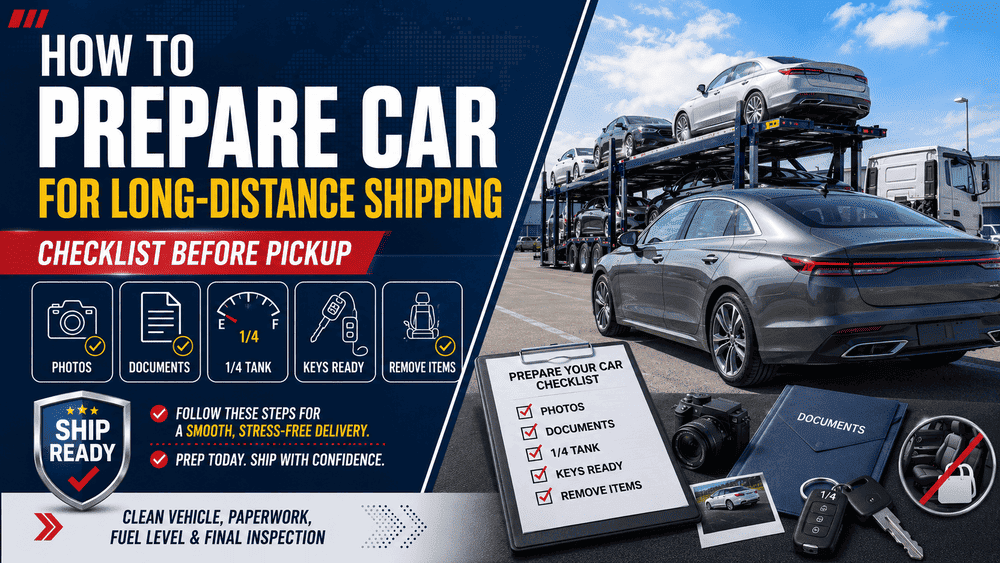
If you want to know how to prepare car for long-distance shipping, start by cleaning the vehicle, removing personal items, taking photos, checking fluids, lowering the fuel level, disabling toll tags, and confirming pickup details with the carrier. Long-distance auto transport can involve several days on the road, multiple stops, and different weather conditions. Therefore, preparation matters. A clean, documented, and ready-to-load vehicle helps avoid pickup delays, damage disputes, extra fees, and confusion at delivery. This guide gives you a practical checklist before shipping a car across the state, across the country, or along a long-distance USA route.
What is long-distance car shipping preparation?
Long-distance car shipping preparation is the process of getting your vehicle ready before an auto transport carrier picks it up for a multi-state or cross-country shipment.
This preparation includes cleaning the car, removing belongings, checking the vehicle’s condition, documenting existing damage, confirming the pickup location, and reviewing the carrier’s instructions. It also helps the driver load, inspect, and deliver the vehicle without avoidable problems.
An open carrier is an uncovered trailer that carries several vehicles at once. It is the most common option for standard long-distance car shipping.
An enclosed carrier is a covered trailer that protects the vehicle from weather, dust, and road debris. It usually costs more, but it can make sense for classic, exotic, luxury, collector, or high-value vehicles.
Door-to-door shipping means the carrier picks up and delivers the vehicle as close as safely and legally possible to the requested addresses. Terminal-to-terminal shipping means the vehicle moves between storage yards or transport terminals.
Why preparation matters before long-distance auto transport
Preparation matters because long-distance shipping creates more chances for delays, confusion, and inspection issues than a short local move.
A vehicle may travel hundreds or thousands of miles. It may pass through busy metro areas, mountain corridors, winter weather, desert heat, rain, road dust, or highway construction. In addition, the carrier may pick up and deliver other vehicles along the route.
Because of that, the vehicle needs to be easy to inspect, safe to load, and free of loose items. A dirty vehicle can hide scratches or dents. Personal belongings can add weight or create theft risk. A full fuel tank adds unnecessary weight. A forgotten toll tag can trigger charges while the car rides on the trailer.
Good preparation also protects you at delivery. If you take clear photos before pickup, you can compare the car’s condition when it arrives. As a result, the final inspection becomes faster and more accurate.
How to prepare car for long-distance shipping step by step
How to prepare car for long-distance shipping comes down to a clear checklist. Follow these steps before the driver arrives.
For a broader guide on the full shipping process, read How to Ship a Car to Another State.
Long-distance car shipping preparation checklist
A checklist helps you avoid small mistakes that can create big problems at pickup or delivery.
Preparation task | Why it matters | When to do it |
|---|---|---|
Wash the vehicle | Helps document scratches and dents | 1–2 days before pickup |
Remove personal items | Reduces theft and insurance issues | Before pickup day |
Take photos | Supports condition comparison | Before driver inspection |
Check battery | Helps loading and unloading | Before pickup |
Check tires | Reduces loading issues | Before pickup |
Leave 1/4 tank fuel | Enough fuel without extra weight | Pickup day |
Disable toll tag | Prevents accidental toll charges | Before pickup |
Remove loose accessories | Prevents damage or loss | Before pickup |
Confirm address access | Helps avoid truck access issues | Before pickup day |
Keep phone available | Driver may call for timing updates | Pickup and delivery day |
This checklist works for most standard open carrier and enclosed carrier shipments. However, always follow the carrier’s specific instructions.
Remove personal items before shipping
The safest way to ship a vehicle long distance is to remove personal items before pickup.
Auto transport companies move vehicles, not household goods. Therefore, personal belongings inside the car may not receive coverage. Items can also shift during transit, block visibility, add weight, or create theft risk.
Some carriers allow limited soft items in the trunk or below the window line. However, this rule varies by company. If you plan to leave anything inside, confirm the carrier’s policy in writing before pickup.
Do not leave these items in the vehicle:
Cash, jewelry, watches, or valuables
Laptops, tablets, cameras, and electronics
Passports, titles, insurance papers, and legal documents
Medication or medical devices
Tools, heavy boxes, or equipment
Food, drinks, liquids, or aerosols
Firearms, ammunition, or hazardous materials
Fragile items, glass, or collectibles
Toll tags, parking passes, and garage remotes
If the car looks packed like a moving truck, the driver may refuse pickup or ask you to unload it.
Document the vehicle condition carefully
Vehicle condition photos are one of the most important parts of long-distance car shipping preparation.
Take photos before the driver arrives. Capture the front, rear, both sides, roof, wheels, mirrors, windshield, bumpers, headlights, taillights, and interior if needed. Also take close-up photos of existing scratches, dents, chips, rust, or paint damage.
Then compare your photos with the bill of lading during pickup. The driver will inspect the car and mark visible damage. If something is missing from the document, ask the driver to add it before you sign.
At delivery, inspect the car again before signing the final paperwork. Use the same photo angles if possible. If you notice new damage, write it on the bill of lading before the driver leaves.
Check the vehicle’s mechanical condition
A running vehicle is easier to ship than a non-running vehicle. Therefore, basic mechanical checks matter before pickup.
Start the car and confirm that it can move forward, reverse, steer, and brake. Check tire pressure, battery condition, and fluid leaks. If the battery is weak, charge or replace it before pickup.
Also look for leaks under the vehicle. A leaking vehicle can cause problems because it may drip onto another car during transport. Tell the carrier about any leak before pickup.
If the car is inoperable, say so before booking. An inoperable vehicle may need a winch, special trailer position, or extra labor. As a result, the quote and pickup plan can change.
Prepare for open or enclosed transport
Open and enclosed transport have similar preparation steps, but the risk profile is different.
Transport type | Preparation focus | Best for |
|---|---|---|
Open carrier | Clean exterior, photos, no loose accessories | Standard cars, SUVs, daily drivers |
Enclosed carrier | Extra documentation, clearance check, special handling notes | Luxury, classic, exotic, collector cars |
Door-to-door | Address access, meeting point, phone availability | Residential and business pickups |
Terminal-to-terminal | Drop-off timing, storage rules, terminal instructions | Flexible customers near terminals |
Expedited shipping | Fast preparation, exact availability, quick communication | Tight deadlines |
Expedited shipping means priority pickup or faster scheduling. It can help when you have a strict timeline, but the vehicle still needs to be ready before the driver arrives.
An auto transport broker is a company that arranges transport by matching customers with carriers. A carrier is the company that operates the truck. If you book through a broker, confirm the final preparation rules with the assigned carrier.
A driveaway service means someone drives your vehicle to the destination instead of loading it onto a carrier. This may work in some cases, but it adds mileage and wear.
RoRo, or roll-on/roll-off shipping, means a vehicle is driven onto a ship for ocean transport. It is more common for Hawaii, Alaska, or international moves than standard mainland long-distance truck shipping.
Regional and city preparation tips
Long-distance shipping preparation can change slightly by city, weather, and route. Los Angeles, Chicago, Houston, Miami, New York, Dallas, Phoenix, and Atlanta are common auto transport markets, but each area has its own access issues.
Los Angeles
Los Angeles has strong carrier activity, but traffic and residential access can be difficult. If your street is narrow or restricted, plan a nearby meeting point with wide truck access.
Also remove toll passes and parking permits before pickup. This helps avoid accidental charges or lost items.
Chicago
Chicago routes can involve winter weather, road salt, and busy urban pickup zones. Wash the vehicle before inspection and document existing paint chips or rust.
In winter, make sure the battery is strong and the tires hold air properly.
Houston and Dallas
Houston and Dallas can involve heat, storms, and long highway routes. Do not leave liquids, aerosols, food, or heat-sensitive items inside the car.
If the pickup is near an apartment complex or gated community, give the driver clear access instructions.
Miami
Miami shipments often connect with seasonal moves and Florida relocations. Humidity and heat can affect electronics, documents, food, and leather goods.
Therefore, keep the interior empty and remove anything sensitive before pickup.
New York
New York pickups may involve dense streets, parking limits, and truck restrictions. A nearby wide street or parking lot can make loading easier.
For long coast-to-coast routes, compare examples like New York to California car shipping companies.
Phoenix and Atlanta
Phoenix heat can damage anything left inside the vehicle. Atlanta routes often connect with the Southeast, Midwest, Texas, and Florida.
If you are comparing shorter regional routes, review examples like Florida to Texas car shipping companies.
How bestcarshippingcompanies.org helps with this
bestcarshippingcompanies.org helps customers compare car shipping companies by city, route, service type, reviews, and coverage. This matters because preparation instructions can vary by company, trailer type, route, and vehicle condition.
The platform supports comparison for open transport, enclosed transport, door-to-door delivery, terminal-to-terminal shipping, expedited shipping, state-to-state shipping, cross-country shipping, and other auto transport needs. As a result, customers can compare providers before asking about exact pickup requirements.
In addition, bestcarshippingcompanies.org includes route pages and company profiles that help users choose companies that serve their origin and destination. Start from bestcarshippingcompanies.org to compare companies by city, or browse popular car shipping routes for route-specific options.
Common mistakes before shipping a car long distance
Most preparation mistakes are simple, but they can create pickup delays or delivery disputes.
Leaving the car dirty
A dirty vehicle makes inspection harder. Dust, mud, snow, and road grime can hide scratches or dents.
Wash the exterior before pickup. This helps both you and the driver document the car accurately.
Keeping personal items inside
Personal belongings create risk. They can shift, break, disappear, or add extra weight.
Unless the carrier clearly allows limited items, remove everything before pickup.
Forgetting toll tags
Toll tags can register charges even while the vehicle sits on a trailer. This can happen during long-distance transport through toll roads.
Remove or disable toll transponders before pickup.
Filling the gas tank completely
A full tank adds unnecessary weight. The driver only needs enough fuel to load and unload the car.
Keep the tank around one-quarter full unless the carrier gives different instructions.
Missing pickup calls
Drivers often call before arrival. If you miss the call, pickup can get delayed.
Keep your phone nearby on pickup day and delivery day.
Signing the bill of lading too fast
The bill of lading protects both sides. Do not rush through it.
Review the inspection notes before signing at pickup. At delivery, inspect the vehicle again before signing final paperwork.
What to do on pickup day
Pickup day should be simple if the vehicle is ready.
Have the keys available, keep your phone on, and meet the driver at the agreed location. If the truck cannot safely reach your street, be ready to meet nearby.
Walk around the vehicle with the driver during inspection. Compare visible damage with your photos and the bill of lading. Ask the driver to note anything important before you sign.
After loading, confirm the estimated delivery window and the best contact method for updates. Also keep a copy or photo of the bill of lading.
What to check at delivery
At delivery, inspect the vehicle before signing the final paperwork.
Check the same areas you photographed at pickup: front, rear, sides, roof, bumpers, wheels, mirrors, glass, lights, and lower panels. If the vehicle is dirty from transit, inspect carefully.
If everything looks correct, sign the delivery paperwork. If you notice new damage, write it on the bill of lading before signing and before the driver leaves. Then take photos immediately.
CTA: Compare companies before preparing your car
Before pickup day, compare companies that fit your route, vehicle type, and service needs.
Start at bestcarshippingcompanies.org to compare car shipping companies by city, route, reviews, transport type, and service coverage. Then ask the selected provider for its exact vehicle preparation checklist before the driver arrives.
Frequently Asked Questions
How to prepare car for long-distance shipping?
To prepare a car for long-distance shipping, wash it, remove personal belongings, take photos, check tire pressure, leave about one-quarter tank of fuel, disable toll tags, and confirm pickup details. Also review the bill of lading carefully during pickup and delivery.
Should I wash my car before shipping it?
Yes, you should wash your car before shipping it. A clean exterior makes scratches, dents, paint chips, and existing damage easier to see during inspection. This helps avoid confusion at delivery.
Can I leave personal items in my car during shipping?
Some carriers allow limited personal items, but the safest choice is to remove them. Personal belongings usually are not covered by auto transport insurance. They can also add weight, shift during transit, or create theft risk.
How much gas should be in the car before shipping?
Most vehicles should have about one-quarter tank of fuel before shipping. This gives the driver enough fuel to load and unload the vehicle. A full tank adds unnecessary weight.
What documents do I need when shipping a car?
You usually need basic booking information, contact details, vehicle details, and the bill of lading at pickup and delivery. Some companies may ask for identification or proof of ownership depending on the situation. Always confirm document requirements before pickup.
Related posts

Blog
Car Shipping Quotes: Compare Companies in the USA
Car shipping quotes are price estimates from auto transport companies for moving a vehicle from a pickup location to a delivery location.
Blog
How Much Does It Cost to Ship a Car Internationally? (Pricing Guide)
Destination is the single biggest variable in international auto shipping. Ocean freight rates vary widely based on route demand, port infrastructure, and available carriers.
Blog
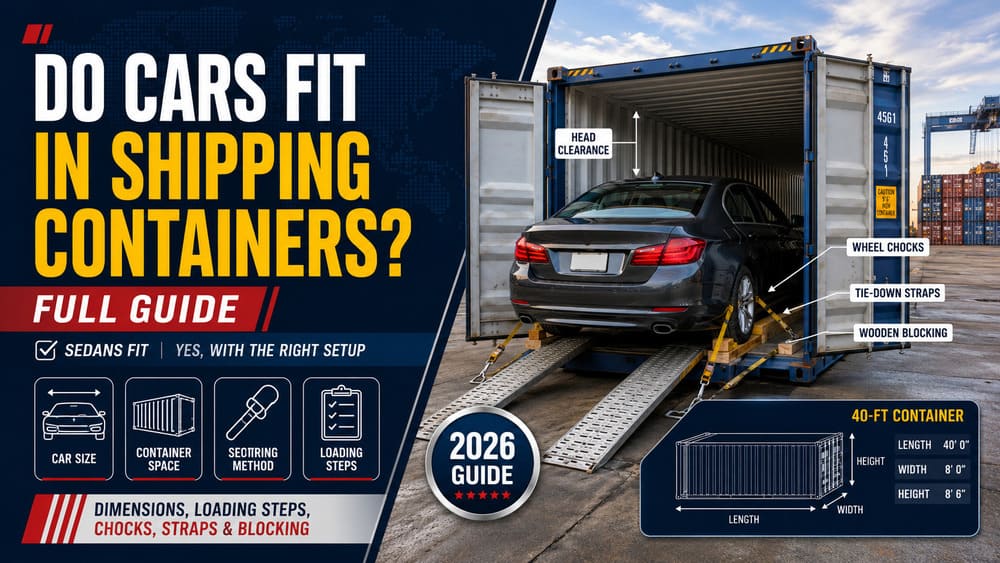
Do Cars Fit in Shipping Containers? Full Guide
Car container shipping is a vehicle transport method where a car is loaded inside a steel shipping container and moved by truck, rail, or ocean vessel.